






Golf carts
Golf cart batteries in flooded, gel and 51.2 V lithium, in the case your cart already takes.
The plant builds GC-case lead-acid blocks and a 51.2 V LiFePO4 pack for the same compartment. Both come off the same lines as the forklift packs, from cells that are graded and insulation-tested before assembly.
Three chemistries
One battery compartment, three ways to fill it.
A golf cart is defined by the tray under the seat, not by the chemistry. All three of these fit a standard GC tray, so the choice is about duty and service life rather than about what will physically go in.
| Chemistry | Voltage | Capacity | Case |
|---|---|---|---|
| Flooded lead-acid | 6 / 8 / 12 V | 85 – 270 Ah | GC2, GC8, GC12 |
| Gel lead-acid | 6 / 8 / 12 V | 60 – 220 Ah | GC2, GC8, GC12 |
| LiFePO4 | 51.2 V (16S) | 105 – 280 Ah | built to the tray |
Lead-acid ranges are the published catalogue ranges. The lithium pack is built to the compartment you measure, so a 105 Ah pack and a 280 Ah pack need not share a footprint.
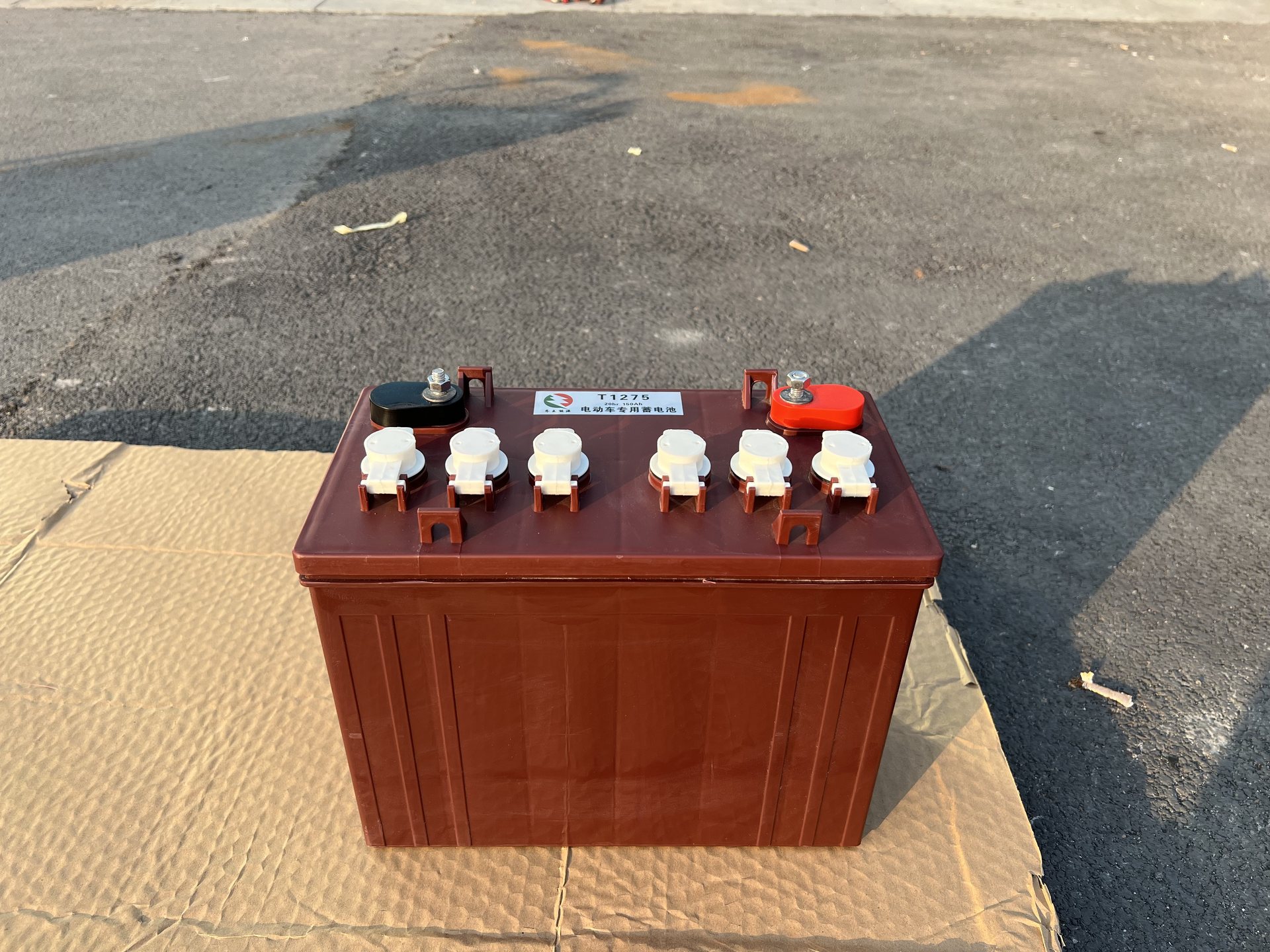
Off the filling line
Filled, capped and charged before it is packed.
Flooded blocks are filled and formed on site, so the electrolyte and the plate stack are under our control rather than a supplier's.
Fitment
Which bank the cart came with.
Golf carts are built around a fixed bank of GC-case batteries. Knowing which bank your model uses tells you the voltage, the number of blocks, and roughly how much room the tray gives you.
| Vehicle family | Original bank | System voltage |
|---|---|---|
| Club Car DS | 6 × 8 V | 48 V |
| Club Car Precedent (early, 4 × 12 V) | 4 × 12 V | 48 V |
| Club Car Precedent / Tempo / Onward | 6 × 8 V | 48 V |
| EZGO TXT / Express | 6 × 8 V | 48 V |
| EZGO RXV | 4 × 12 V | 48 V |
| EZGO Marathon / Medalist | 6 × 6 V | 36 V |
| Yamaha G19 / G22 / Drive | 6 × 8 V | 48 V |
| Yamaha G2 / G9 | 6 × 6 V | 36 V |
Model years differ in tray and frame rails, so treat this as the starting point and measure the cart in front of you.
Before you order
Measure three numbers, and we will confirm the pack.
A lithium pack replaces six or eight blocks with one box, so the space it has to live in is the space the whole bank used to occupy — minus the gaps between blocks, plus whatever the frame rails take back.
Net length
The clear length of the tray, inside the end stops. Not the length of the old batteries — the tray they sat in.
Net width
Measured between the frame rails or divider bars, at their narrowest point. This is usually the dimension that decides the layout.
Height under the seat
From the tray floor to whatever the seat pan or the controller cover leaves you. Include any hold-down bar.
Send those three numbers with a photograph of the compartment and the model year, and you get back a dimensional drawing and a pack specification — before any money changes hands.
Questions that come with the enquiry
What buyers ask before the first order.
Short answers, because the long ones depend on your cart.
Can a lithium pack replace a 6 × 8 V bank directly?
Yes, at the same system voltage. Six 8 V blocks make 48 V; the 51.2 V pack is the lithium equivalent of that bank, and it is wired to the cart's existing cables through the connector you specify.
Does the charger have to change?
A lead-acid charger finishes and equalises, which a lithium pack must not see. The pack and its charger are specified together, and the charger's connector is matched to the cart.
What decides between flooded and gel?
How the cart is used and who maintains it. Flooded blocks want watering and reward it with the lowest cost per cycle; gel needs no maintenance and tolerates being left standing. Both are built here, so the answer is about your fleet rather than our range.
More from the plant
Where this sits on the site.
The same plant, the same cells, three other vehicle classes.
Forklift lithium
The line this plant was built around, with a fitment table for 100+ truck models.
Sightseeing and utility vehicles
60 V and 72 V classes for tourist shuttles and works vehicles.
Next step
Send the tray dimensions and the model year.
You get a dimensional drawing, a pack specification and a firm quotation — no obligation, and no generic price list.